The imagery is vivid. And ominous.
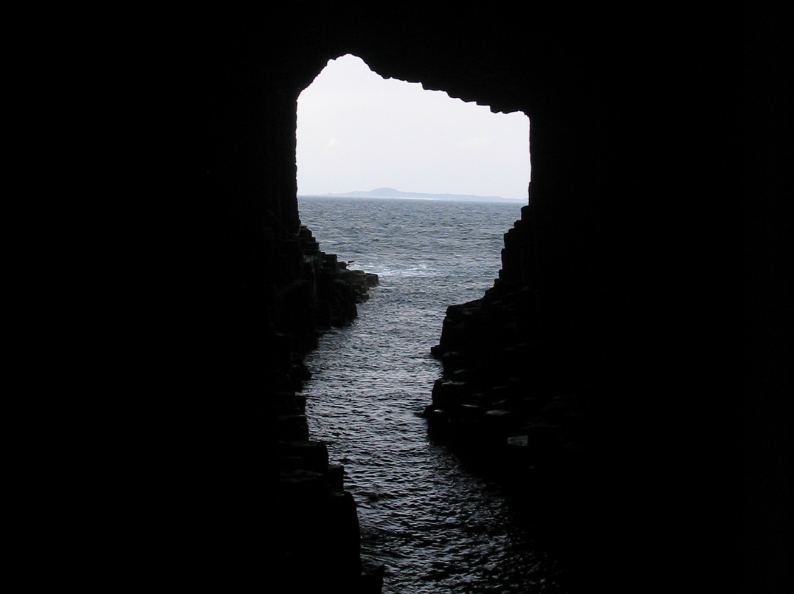
It is August 1829. A small boat is moving slowly towards the uninhabited Scottish Island of Staffa in the Inner Hebrides. Staffa is small and lies off the west coast of Scotland in Argyll and Bute. The weather is awful, but the boat’s occupants are seasoned warriors of the sea. That is, all except one. For the lone passenger sitting among the boatmen is none other than the famous German composer Felix Mendelssohn. Felix is seasick but is determined to view the famous sea cave on Staffa that would eventually inspire one of his greatest works.
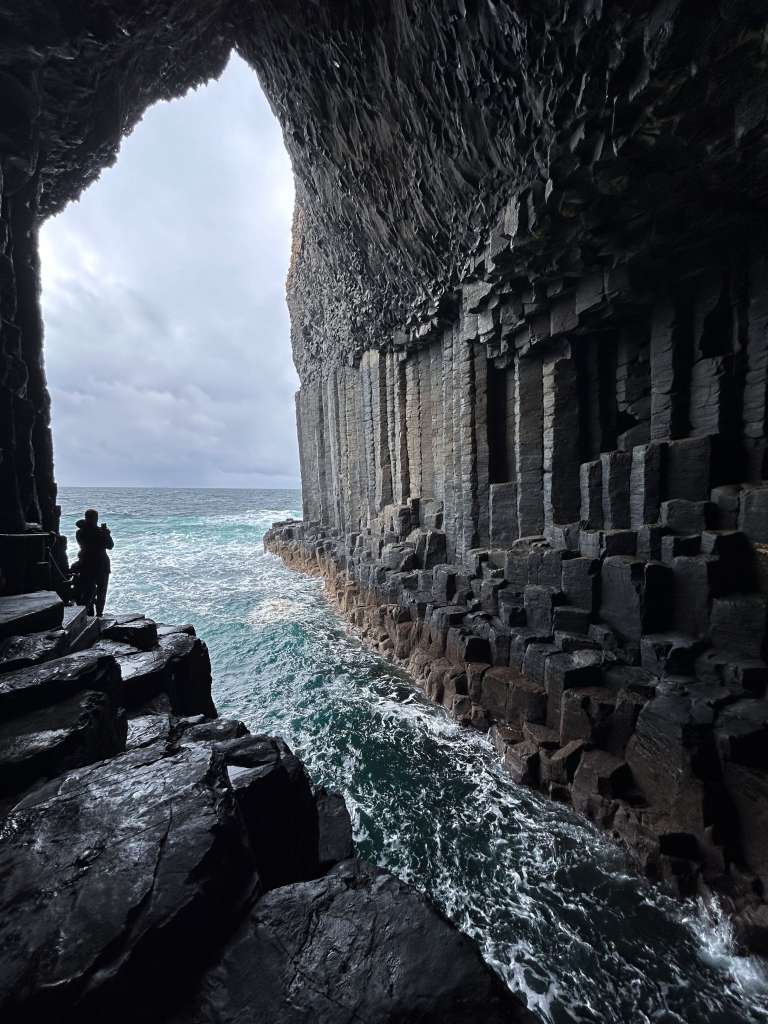
Fingal’s Cave is literally a 60-million-year-old hole in a very large rock. Tall and perfectly hexagonal basalt columns line each side of the opening like the gates of King Kong’s Skull Island. Once the boat is safely ashore, the cave can only be reached on foot via a narrow walkway. Inside is a sight to behold. The cathedral-like natural acoustics left an indelible mark on Mendelssohn. There are sections of his Hebrides Overture (particularly in the woodwinds) that recreate these acoustics by producing the balanced timbre of a cathedral church organ.
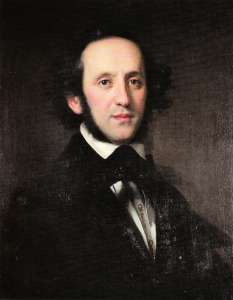
Mendelssohn quickly jotted down one of the most famous themes in classical music on a postcard, which he later sent to his sister Fanny with the words: ‘In order to make you understand how extraordinary The Hebrides affected me, I send you the following, which came into my head there.’
However, it was well over a year before Mendelssohn finally completed the overture on 16 December 1830. That year proved a very productive one for the composer, with the completion of his Reformation Symphony as well as several secular and chamber works. It also saw him tour Italy, where he sketched ideas that would later become his Symphony No. 4 (known as the ‘Italian’ symphony).
It is worth noting that Mendelssohn took his time completing his symphonies. The ‘Italian’ symphony wasn’t completed until 1833. His ‘Scottish’ symphony (the sketches of which were written on the same trip while visiting Fingal’s Cave) wasn’t completed until 1842! So, with such a frenetic schedule in 1830, it is quite understandable that Mendelssohn took his time finishing the Hebrides Overture.
Or is it? A theory has come to light suggesting that Mendelssohn purposely waited until 16 December before finishing the overture. So why wait? Well, it is around this date that Fingal’s Cave becomes fully illuminated! Depending upon the cloud cover, when the sun lies precisely 5.6 degrees above the horizon, and due to the cave’s alignment and height of the entrance, the 227-foot-long cave becomes bathed in light all the way to its back wall. This only occurs on or around 16 December every year.
It is believed that on that windswept boat journey to Staffa, Mendelssohn heard the boatman talk about this unique event. Locals would have been well-versed in the aural tradition and the journey to Staffa would have certainly been filled with conversation, if only to alleviate poor Felix’s seasickness! Mendelssohn devotees believe it is no mere coincidence that the composer chose to complete his overture on 16 December during the winter solstice.
So, did he include a musical representation of this bathing of light in his overture? I like to think he did. The clarinet duet starting at bar 202 and concluding at bar 217 has to be it. There are brief moments of respite in this overture, but none like this. A sublime duet with a brief interlude from the violas that leads us into the ominous finale. It is unmistakable. It is a moment of musical light amid a gruelling journey of B minor darkness. Listen out for it live on 2 August when the Inner West Symphony Orchestra presents Mendelssohn’s Hebrides Overture (Fingal’s Cave) in B minor, Op. 26.
By Andrew Derrett