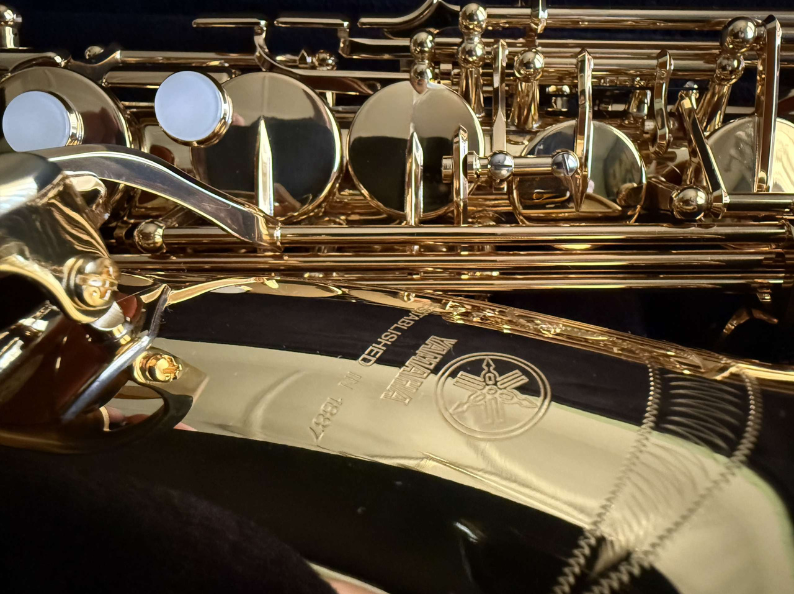
It’s fair to say the saxophone is mainly linked with jazz. Big names like Charlie Parker (alto) and John Coltrane (tenor) are iconic masters of the instrument, and Gerry Mulligan (baritone), Sidney Bechet (soprano) and Adrian Rollini (bass) have been champions of its lesser known variants.
But the classical saxophone scene is not to be overlooked. Bizet first introduced the instrument in his L’Arlésienne Suites, giving it a delightfully romantic solo in the opening movement of the first suite. That opened the flood gates, with composers such as Ravel, Prokofiev, Berg, Kodály and Rachmaninov using the saxophone in their works.
There have been many fine exponents of the instrument in the classical repertoire too: Marcel Mule, Sigurd Raschér, Eugene Rousseau, Claude Delangle and John Harle, to name a few. The only notable problem in all this is, they are all blokes!
What? Women can’t play the saxophone?
You bet they can, and we need look no further than Elise Hall, an inspirational Bostonian woman, who not only had a major influence on female representation of saxophone playing at the beginning of the 20th century, but single-handedly built the classical repertoire of the instrument from the ground up. Hall was born in Paris on 15 April 1853 and later settled in the United States, where she married Dr Richard Hall, an eminent physician famous for having performed the first successful appendectomy.
In her early 40s, Hall contracted typhoid fever, leaving her with severely damaged hearing. To prevent further hearing loss, her husband suggested she learn a wind instrument, so in her mid 40s, Hall began studying the saxophone and eventually became the first prominent female saxophonist in the United States.
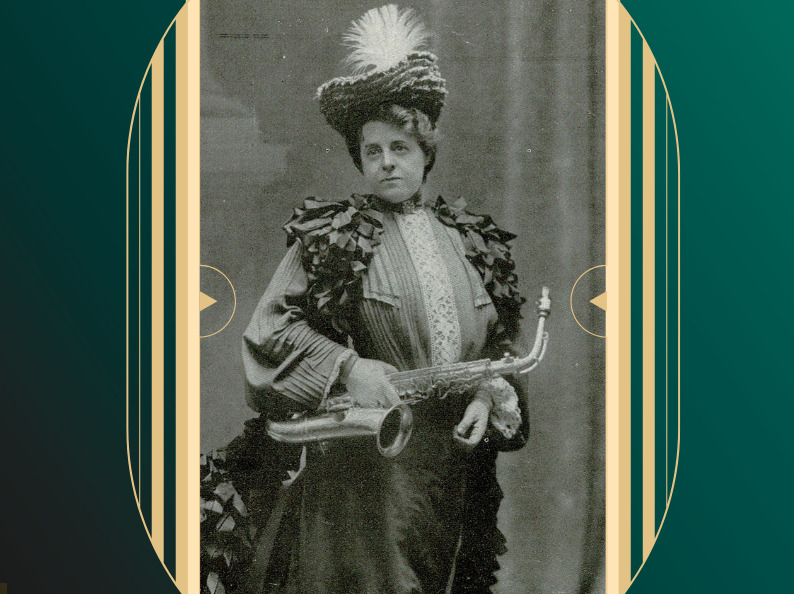
After her husband’s death (ironically from appendicitis), Hall was left with a large sum of money and a growing passion for the saxophone and orchestral music. She became a leading patron of saxophone repertory, commissioning works from many of the leading French composers at the time, including Vincent d’Indy, André Caplet and Léon Moreau. Her biggest commission by far, however, was Claude Debussy’s Rapsodie pour Saxophone et Orchestre.
The commission itself was a protracted affair. Hall first approached Debussy in 1901, who gladly accepted the cash-up-front commission to pay a tax debt. However, he did not have any confidence in either the saxophone or her playing. He referred to Hall as ‘the saxophone lady’ and admitted in a letter to a friend that writing for the saxophone felt like a ‘perilous leap, and one risks breaking one’s back’.
Debussy procrastinated, not writing even a single note for months, and was reportedly stressed by the pressure of the deadline. Undeterred, Hall visited him in Paris accompanied by her friend and new saxophone teacher, George Longy. ‘It appears Longy and the saxophone lady are in Paris!’ Debussy wrote to his wife, annoyed by the unexpected visit. ‘I am trying to finish this goddamn piece as quickly as possible.’
But it was far from complete, so Debussy hastily presented Hall with a score to his recently composed ballet Pelléas et Mélisande arranged for voice and piano. Unsurprisingly, this didn’t cut it, and Hall refused to leave until Debussy promised to complete the saxophone work.
Debussy eventually finished it, even calling it ‘a completely new direction’ in his composition, and delivered it to Hall as a piano score in 1911, ten years after it was commissioned. It wasn’t until after Debussy’s death in 1918 that the piano accompaniment was orchestrated for full symphony orchestra by Jean Roger-Ducasse. It premiered on 14 May 1919 at the Salle Gaveau by the Société Nationale de Musique, conducted by André Caplet. Sadly, by then, Hall was profoundly deaf, and the work was performed by the French saxophonist Pierre Mayeur.
Elise Hall died on 27 November 1925, in Westwood, Massachusetts, aged 71, leaving a legacy of fine music written for the saxophone by some of France’s great composers.
By Andrew Derrett